Who Should Use WordPress?
January 5, 2024
CONSUME CREATIVELY
This content is available in:
AUDIO
TEXT
We love WordPress.
Like, as in, we want to marry it.
Actually, we did marry WordPress in the ripe old year of 2008. And we don’t cheat. Occasionally we have to go on dates with other systems. But our real love is WordPress.
But there are a lot of choices out there. And we do not always advise people to build their sites in WordPress. It’s not the right choice for everyone. So how do you know if WordPress is right for you?
We made a checklist!
Starting with your goals and tech ability all the way down to automating your business processes. We’ll take you through the questions we ask potential clients to help them decide if WordPress is the right system for their business.
Who should use WordPress?
If you’re wondering if WordPress is right for you, you’re not alone.
About half of the people who sit down with us for an initial consultation
Most of the people we talk to about a new website say that they want a system they can update on their own. But nine times out of 10 they don’t know which system they want to build their website on or which system is right for them.
If a potential client has their heart set on WordPress, it’s often because their current website is already using it, and they prefer to stay with what they know. On the flip side, some folks are frustrated with their current system, and after comparing it with other systems, they’ve realized WordPress can meet their needs.
(Maybe that’s why you’re reading this blog post 😉.)
What makes WordPress so awesome?
Well, it’s awesome for different reasons for different folks. For us we picked it after first custom coding everything and then trying Joomla, Drupal and Magento and custom coding everything. And we were still on the hunt for the right system to grow our business on.
Then my brother called me asking if we’d heard of WordPress, because it looked really cool. So I tried building our next client site on the system. And stuck with it because from the code to the file structure, it actually made sense. There was so much support for it I quickly taught myself how to develop on the system. Because if I didn’t know how to do it someone out there had already figured it out and documented it.
It’s great for our clients because it’s:
Extremely extendable
Currently there are almost 60,000 free plugins in the official WordPress plugin directory. (SquareSpace has 37…just sayin’.)
Great Out of the Box SEO
This is all thanks to its clean code, mobile responsiveness, fast loading speeds, and features like customizable permalinks and XML sitemaps. The availability of SEO plugins and regular platform updates amp up SEO as well.
(Learn more about how SEO can build your business in this podcast episode.)
Large Community & Support
If you don’t know how to do it…there’s a YouTube video about it.
It’s Like Insurance
According to W3Techs, as of 2023, 43% of ALL the websites on the internet are built on WordPress. So, if you hate your web designer you can fire them, because there’s another WordPress developer waiting right around the corner.
Still not sure who (or if you) should use WordPress?
1.What are your goals for your site?
When we dive into what folks want from their new website. Around 80 to 90% of people just want to be able to update it themselves. But you can do that in a lot of systems. I always tell people, if you can check your email and use a system like Microsoft Word, you’re good to go – updating your WordPress, especially with a bit of training, should be a walk in the park. And if it’s not…it’s built wrong.
For some folks, when they talk about a website being “easy to update,” it goes beyond just the technical side. It’s also about having good support and making it simple for one administrator to hand off the site to another. In many businesses and nonprofits, there’s a new webmaster every few years. Without solid support, the new person taking charge can feel a bit lost. Fixing this isn’t so much about the system as it is about how the organization handles it.
Here’s our trick…
We record all our training sessions with clients, creating a searchable support library and offering online training options. This way, when there’s turnover, the new person can easily get up to speed. It doesn’t matter which system you used to build your site; planning for staff changes should be a priority. Creating a user guide on how you run your site is the key – do it before the new person even arrives!
Other than DIY updates, common site goals include:
- Looking as awesome as your business
- Showing off work or products
- Integrating with the systems you use to run your business
- Offering specific features to visitors (like a shopping cart or membership portal)
- Being user friendly and easy to navigate
- Showing up on Google
Let me start with WordPress, in the right hands, can do all those things.
And some other systems can too. But there are a few in particular that WordPress handles exceptionally well and they can all be grouped under the heading of customization. Which leads me to the next factor you need to examine to answer the question “who should use WordPress”.
2. How much customization do you need?
Customization has two sides…
1. The look.
There’s this misconception that all WordPress sites look the same. Not true at all! We can design WordPress to look however you want. Sure, if you’re just using the basic WordPress or a default theme like the one that pops up every year, they might look similar.
But the key question is: Do you want it to look like that? Because with a skilled developer, you can totally customize it to look however you want.
2. Functionality.
We firmly believe that a client’s website should be like an employee for their business – making life easier, not harder.
What can your website do to make your life easier?
Your website can do a whole bunch of things, from a simple blog to a full-on learning management system or a shopping cart. It could be anything from handling job applications, project management, online sales or promoting events to providing a resource library and membership section.
The real question is, what functionality do you want? Because trust me, if it’s a big ask, odds are good WordPress may be the only system (short of a custom built system) flexible enough to make it happen.
Which leads me to my next question to determine who should use WordPress. Most of what we’ve talked about so far happens inside your site, but most of us manage our businesses using other systems outside our site. For your site to function as a valuable team member, these different elements need to communicate with each other. So…
3. What does your site need to INTEGRATE with to make your life easier?
Good news: Most things play nice with WordPress
Whether you want WordPress to sync up with your email marketing software, booking system, point of sale software, sales force, or CRM – yup, pretty much anything – most things can play nice with WordPress.
Even if there’s no direct plugin, you can you a service Zapier to bridge the gap and connect WordPress with your other software.
To be fair, using a third party connector can get tricky. It needs to be set up just right or it’s not much of a time saver. Direct integrations usually work smoother – no doubt about it.
Open Source = Opportunities for You
Odds are good if you’re trying to connect two things, someone else has too. So unless you’re using some super obscure system, chances are there’s probably a way to do it with WordPress.
The reason there are so many ways to extend WordPress is because it’s open source – it’s like the universe owns it. No red tape, no hoops to jump through. When someone wants to integrate something, they can usually figure it out using an API, and voila, you might just have a free or budget-friendly solution to your problem!
The big bad BUT
Look at what you already have first. Don’t recreate the wheel.
But, and there’s always a “but,” right? If you’re using a specific software for things like patient reminders, appointments, paperwork, and it’s all neatly bundled, explore what that system can do BEFORE trying to build it in your website. Having everything in one package is usually far more streamlined than cobbling things together.
This advice goes double for membership management softwares, especially for associations. If you need a bunch of interactivity and seamless connection with a CRM then you’ll be best served by all encompassing software, and if you’re not recruiting new members or interfacing with the public you may not even need a separate WordPress site.
Unfortunately some of those systems look like they fell out of the 90’s. And in those instances you have to make a decision about what’s more important: a customized look or functionality.
It’s all about finding the right mix to make your life easier and your business run smoother!
4. How tech savvy are you?
Everyone has a different relationship with their site – from tech whizzes who tackle everything to those who’d rather not touch it. Most folks, though, fall somewhere in the middle.
The cool thing is, you don’t need to be a tech genius to tweak words and pictures on your site. WordPress is user-friendly with a drag-and-drop interface. Even if you’re new to web design, you can easily get up to speed.
I said this earlier but I’ll say it again, seriously, if you can handle email, Microsoft Word, or PowerPoint, you can master updating your WordPress site.
If your site is simple – don’t overthink it.
Embrace your comfort zone.
Now, if you’re after a simple website without the bells and whistles and need less customization or integrations (we’ll get to that next), and WordPress feels a bit much, no worries. Embrace your comfort zone.
Explore other systems and find one that feels comfy to you. And hey, if you do choose WordPress, just know there’s a heap of support waiting for you. You won’t be stumbling around blind; there are plenty of training videos to guide you. You’ve got this!
So what do you think?
Who should use WordPress – Is it for you?
We’re obviously big WordPress fans. But, we get it – it’s not the perfect fit for everyone.
With so many website-building options available, it’s crucial to choose the system that suits you best. Hopefully now you’re one step closer to making an informed choice.
If you’re unsure about WordPress, reflect on your goals, both present and future, consider customization versus functionality, gauge your tech-savviness, and ponder if integrations align with your company’s needs. And if WordPress IS your jam…feel free to reach out, and we’ll happily guide you through it!
Who Manifested This Madness?

This fabulous human, that's who.
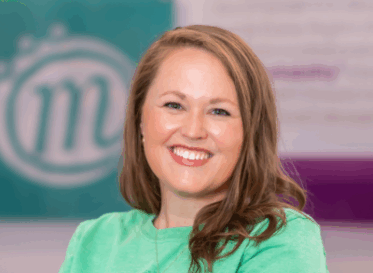
Monica Maye Pitts
Monica is the creative force and founder of MayeCreate. She has a Bachelor of Science in Agriculture with an emphasis in Economics, Education and Plant Science from the University of Missouri. Monica possesses a rare combination of design savvy and technological know-how. Her clients know this quite well. Her passion for making friends and helping businesses grow gives her the skills she needs to make sure that each client, or friend, gets the attention and service he or she deserves.