Bloomerang from a User Perspective with Guest Wende Wagner
July 29, 2022
CONSUME CREATIVELY
This content is available in:
AUDIO
TEXT
Like many organizations in the nonprofit world, the Missouri Symphony needed to find a donor management system to handle their particular set of needs. After some research, they chose Bloomerang. In this episode, we welcome Wende Wagner, Director of Philanthropy for the Missouri Symphony, who discusses how they chose it, and her favorite and not-so-favorite parts of the platform.
They converted over from Neon and really like the data management and integration tools Bloomerang offers. Join me as I interview Wende to learn why!
Episode Highlights
Introduction to the Missouri Symphony – 1:31
Donor Management before Bloomerang – 5:14
Functionality of Bloomerang – 11:14
Using Bloomerang for Events – 13:59
Fom building capabilities in Bloomerang – 15:40
Bloomerang integration with accounting software – 24:48
Reporting in Bloomerang – 29:39
Using Bloomerang for printed mailings – 35:37
What Bloomerang costs and advice – 39:00
How to contact Wende – 43:15
Full Transcript
Wende Wagner
The thing about Bloomerang, which I love and slightly don’t like about them, is that they don’t reinvent the wheel for themselves. So if there is something out there like Kindful, that does really great event management, they would figure out a way to integrate with that partner with them, or in this case, buy them out, instead of building it in Bloomerang themselves. They’re like they do this well, why are we going to spend the time when we can just work with them?
Monica Pitts
You’re on a mission, and you just need more people to know about it. And whether you’re brand new to marketing or a seasoned pro. We are all looking for answers to make marketing decisions with purpose. I’m Monica Pitts, a techie crafty business owner, mom and aerial dancer who solves communication challenges through technology. This podcast is all about digging in and going digital. I’ll share my marketing know-how in business experience from almost 20 years of misadventures, I’ll be your backup dancer. So you can stop doubting and get moving towards marketing with purpose.
Hello again, and welcome back to Marketing with Purpose. I’m really excited. Oh, I should probably introduce myself first. My name is Monica Pitts and I am your hostess today. And I’m the lucky lady who gets to interview our guest, Wende Wagner with the Missouri Symphony Society. But wait, do you guys call yourself the Missouri Symphony Society anymore? Introduce yourself?
Wende: Hi, I’m Wende Wagner. I’m the Director of Philanthropy for the Missouri Symphony. So if you have been in the Columbia area, you will know as it’s the Missouri Symphony Society, we were started in 1970 as such, but officially, two years ago, we went ahead and dropped the society. Through discussions from diversity, equity inclusion, it felt that it was a little antiquated and also not very inclusive language to have this kind of private club that people were involved in. So it is officially with the just the Missouri Symphony.
Monica: So how does that go? Like, I always wonder when people are doing like, that was kind of a small rebrand, you know, but how did that go? Did people pick it up and run with it really? Well, at least you had to have the same words. That’s important.
Wende: It depends on how long they’ve had a relationship with the organization. So all of our newer businesses and donors and things like that. It’s the Missouri Symphony. And then we have an acronym of Mo S Y. Mo Symphony. Mosey is how we pronounce it. So utilizing the Missouri Symphony of MoSy together for them has been really easy. The kind of the diehards, who have been with us for some of them 50 years, still struggle to drop it, but they’re getting better because I just gently remind them, just the Missouri Symphony.
Monica: There’s a number of nonprofits in town that actually have that like naming challenge, like Ragtag and also Boone History and Culture Center, like as they’ve transitioned their names, and I should actually ask PedNet, how that’s going with their new name. Okay. Um, man. I get their Local Motion.
Wende: That’s what it is, which I love. And it makes sense. I’m not sure I really knew what PedNet meant.
Monica: I mean, I did, but it’s because they’ve been involved with our year-end giving campaign that the Community Foundation puts on for so long, and we help market so they’ve been one of our very creative participants that have found new ways to like, bring fundraising in the year-end giving season to, like awesome results. But yeah, so they just rebranded last year. So well, congratulations on your two year old rebrand, people are picking up it and using it.
Wende: In the middle of a pandemic, it was fine.
Monica: Okay, so the reason that I invited Wende here today is because they use a donor management system that I have never played with before, which is exciting. I know that many of you are investigating different ways to manage your donor database and get your marketing done for your organizations. And so I wanted to bring Wende in, so she could give us a user’s perspective on Bloomerang and that’s not Boomerang, like the thing that you throw that comes back.
It’s B l o o m Bloomerang.
And thank goodness they’re running ads because that’s how I found it online. So to kick this off, I would love it if you will first just explain to us like, what made you decide to invest in a donor management system initially? And like is this the first one that you’ve used or is it hasn’t been like a journey for your organization?
Wende: Sure. So I’ll start personally, I came into my fundraising career and was lucky enough or I’m not sure I’m fortunate enough to jump straight into using The Raiser’s Edge, which is like the granddaddy of all donor database systems, I think they are still the industry standard. They’re also just insanely expensive, depending on the size of your organization. So that was back in 2013. So it wasn’t even as user friendly as it is. Now, it was a lot of back end things. They didn’t have apps or any of that. So that was my experience, personally, and I use that for almost six, seven years. Coming to the Missouri Symphony, they had Neon, which I had never heard of.
Monica: I have anger at Neon, because I have had to integrate it with websites before. And anyway,
Wende: And I’m not sure of the process, they acquired, the Symphony acquire that 2016. Before that they had no donor, Excel was their donor database system, as many smaller nonprofits do. So everything went into Neon. And at the time, there was an executive director. And maybe the Conservatory manager at the time, so there really wasn’t any office people, we had board members that were stepping in and coming in part time and helping in the administrative fields. So the people that set it up, were volunteers didn’t have a lot of experience in donor database management, or what was not what would be helpful for future fundraisers.
And then they finally did hire an office manager in 2018. Yes, is when Rachel started. So she was actually the person that really managed that. But she was also not really given any training. It was, here’s our database, here’s how we enter things in. So there was a lot of, there was no consistency and how things were entered. There was no directions, there was no standardization of anything, it was anybody that jumped into that system entered in information the way they wanted to.
So when I came in at 2020, I looked at Neon and went this is I don’t like this at all This is messy from our from our data entry, but it wasn’t user-friendly. I felt at all it was difficult to pull queries and reports. It wasn’t- it didn’t make sense to me. And maybe that was my kind of bias of Raiser’s Edge, which is very difficult to learn how to write queries in Raiser’s Edge.
But Neon was harder. And it just wasn’t giving me good data.
In a way I was spending so much time. So then my predecessor, and our executive director had already started a conversation about potentially switching. She also didn’t like it, didn’t like Neon. So I jumped in. And there well I said something, I think I angrily said, Oh, my gosh, I hate this system. And he said, well, we were thinking about switching. So why don’t we look into that. I said, great. So they had already started some conversation with Bloomerang. And then I did my due diligence. And I went ahead and called The Raiser’s Edge and got some quotes and did a few other companies. And that’s how we landed on Bloomerang.
Monica: It’s always such an investment of energy when you decide to switch, I feel like you have to be in a lot of pain before you’re ready to switch. And I also feel like what you just described is really true for so many small businesses and nonprofits alike, which is that you don’t always begin with the end in mind, you don’t have good conventions, even just like the MayeCreate file system for how we manage because we make like a gig of data like that every day, because we have people designing stuff every day. And if we didn’t have a good naming structure and folder structure, you’d never be able to find anything that you didn’t make yourself. And so it’s the same thing when you go into these systems. So I feel like that’s a good lesson learned is like, sometimes it’s not just the system, sometimes it’s the human beings using your system. Not using it as intended.
Wende: If you’re not in the head of kind of, there’s I feel like there’s almost there can be two different heads. There’s like the fundraiser, head and there’s database management head, and they’re not necessarily the same. So if you are lucky enough to be in an organization that you are not the same person like I am sitting down and having that conversation as something as simple as naming convention, so is it, Mr. Brad Pitt? And he doesn’t have a partner anymore, and like Ms. Angelina Jolie, like how are you addressing everything? How is that standardized, and then it’s the once you have that figured out, then every time you touch a record, you double check to make sure all of that is correct, especially if you’re jumping in where you have a long standing database, I have six years of database. And so it’s just determining how you want to present everything to the from the organization, and then making sure everybody’s record matches that. It’s kind of annoying. But if you have that rule in place, that even if your executive director opens up, you know, Jimmy Donor’s record, he checks, he knows what that is. And does.
Monica: So yeah, that’s essential. So you guys use Bloomerang. And obviously, you’re using it to manage your donor data? How, like, how else do you use it? What needs does it fill in your organization?
Wende: So it has, it is capable of accepting donations via credit card, so they have their own processing.
So we have a form online that they can join. So that automatically creates a record in Bloomerang, tracks it, I don’t have to do anything, it’s beautiful.
I also receive emails when someone donates online. So that’s really great to get that notification, you can also put in multiple people. So even though I am the database administrator, all of our generalized email goes to like an office at themosy.org. So I actually if if I want to get notifications, I can add myself, but I can also, if we do our conservatory has tuition payments, we can set up a separate form for those parents to pay for their tuition payments. And I can add our conservatory director, so she can see when people are paying their tuition. And I don’t have to let her know or she doesn’t have to dig into the database, she can just see in real-time when people are are doing that. So that’s been really effective.
We’ve recently added the Kindful integration, they Bloomerang bought out Kindful. And that has been fantastic for event management. The thing about Bloomerang, which I love and slightly don’t like about them is that they don’t reinvent the wheel for themselves. So if there is something out there, like Kindful, that does really great event management, they’re not going to they would figure out a way to integrate with that partner with them, or in this case, buy them out instead of building it in Bloomerang themselves. So that’s been slightly annoying, because depending on what that integration is, sometimes you have to pay extra for it when I feel that it’s something that should just be offered. But I also love that they’re like they do this well. Why are we going to spend the time when we can just partner with them? So we do use that Kindful events. And that has been we started doing that. Oh, when did we get that? January, February, and we used it for our Gala. That was we had a it was in January because we use it for a intimate fundraising event we had in February and then our gala and it was a dream to use.
So that’s been really fantastic to have that integration, there is an integration with MailChimp that we have not dived into yet. We just haven’t had the time to sit there and go through all the tutorials and everything to really dig into it. So that’s hopefully something we’re going to be able to focus on after our summer music festival.
Monica: So with the Kindful integration, if somebody buys a ticket, does it like note that like in their profile?
Wende: Create a record for them. So in the past on those events, we would use Eventbrite. And then I would have to manually enter all of that into Bloomerang. Time suck.
Monica: Well and like what a recipe for error, right? Like, because when I do something over and over again, my brain like shorts out after like, the fourth time, and it’s like, did you do it? Or did you not do it? What and then I start spelling things wrong. And I’m like, oh, man.
Wende: Oh, did I forget to put in a nondeductible amount for this ticket and and so when that happened, I was like, I’m spending way too much time with this. And we when I inquired about the add-on. It was like nothing a month. It was so like it was a quarterly payment. And then I was like, Oh my gosh, that’s only $20 a month and I’m spending way more than one or two hours manually entering this.
So it’s been completely worth it because it puts if they don’t already have a record, it creates a record for them. It puts in the gift because I actually tell it which fund and campaign and appeal for this event, so it does all of that automatically. And I don’t have to do anything.
Monica: So as a person that has to build forms and all kinds of different systems, I always want to know what like the form building capabilities are? Are you the form builder, like the person who asked to build the donation form? And that kind of stuff? Did you feel like it was pretty flexible and easy to use? Because sometimes it’ll be like, give us your T-shirt size? Or get, you know, you just have to add those extra little things in. And so how is that? Is it easy is it hard?
Wende: It depends on what you want to do. And having the event so they have an event one, and then they have a non-event, which is more of like gathering information. Yeah, I can’t remember exactly what they call it now. And we’ve we utilize the event or donation form more often. The trick with the donation form that we found, which is why we got the event. So they’re just two different things, donations and events are different.
So when we were trying to utilize the donation form to do events, it wasn’t able to do all the things we wanted. So one of the things was we before we got the kindful integration, you couldn’t select more than one option. So if you wanted to buy an adult ticket and a child ticket, you could not do that within the same form you could do to adults, but it wouldn’t let you select multiple types.
So for donation form, that’s great. Usually you have your tiers, and then you have an other and that’s fine. But if we were trying to do this other so now that we have the integration, so I would say if anybody asked to run events, and is thinking of getting Bloomerang, I believe the Kindful integration might be something that is included. Now, I don’t know when we did it, they hadn’t quite acquired. So it might be built in already. In the price of things we had to add it on.
It’s totally worth it. Please get it.
The other thing we noticed is we tried to use Bloomerang to do too much for us. So I will use the example that came up is when we first got Bloomerang for our conservatory tuition, it was something that kind of went sideways for me. Nobody asked me what my opinion on this. And it had to be done quickly. And they just kind of jumped in and used it and I would have recommended something different, which is when now what we’re using is a tried to tuition or conservatory registration. We are required to ask students names and doctor’s information and do they have allergies, we just get all of this information t-shirt sizes. What instruments do they play? And there’s just a lot of data that ended up getting added is a constituent. They call it almost like a constituent field. And what that did is it added those questions to every record. And I was like, no, no, guys, no. No.
Monica: We don’t need to know what instrument everyone plays.
Wende: And the other tricky thing we found is that if a parent had two children, they had to go fill that in twice. And it overwrote the first kid? Writing over.
Monica: Yeah, I bet it did. So then all you have is like a success email, hopefully, that’s sent to you to have that information.
Wende: So it was just one of those things that they were like, oh, we can do this. And they we just didn’t know that kind of what the things would do. So now, it’s not perfect. But now we have a Google form that they go and fill out with all that information. And then there’s a link that says, fill this form out. And when you’re done, go pay. And so it’s not perfect, but I don’t need, our database does not need all that information about their students. Yeah, the appropriate place for it. It’s mainly kept on file in case the director of the conservatory needs it. So having it just in an Excel like a Google Sheet is great. Anybody can access it versus cluttering up our database. So that’s another fun thing I get to go clean up is getting through all that.
Monica: Well, and I think that’s really good advice, too.
Because not every system is meant to do everything and and I often have people come to me with their websites, and they’re like, hey, we want to do all these things. And I’m like, Whoa, you know, there might actually be a system that, you know, does that for you.
And maybe that’s something that we should look at instead of trying to custom build the wheel into your website, because while not every system is going to be perfect for your organization they’re a stepping stone, and you’ll learn as you use them. But if you’re going to create it on your own for the first time, it’s it’s expensive.
And also, you just you don’t know what you don’t know, you know. And so that’s where like the explosion happens, because then suddenly people are like, wow, actually, now we want to be able to do this other thing. And you’re like, well, that, whoa, didn’t plan for that. And as for the programmer, you’re like, crap, what have I done that’s gonna like roadblock that, what am I going to have to go back and undo so I can put this other thing in now, you know.
So I like that you are using it for what it’s meant for. And it’s meant to help you manage your donor data. And then you can use your website for what it’s for, and use the events. And to those of you guys who are listening, like, I feel like it sounds like Bloomerang could be great if you just have a Gala. Or maybe you just do a 5k. So you might have a few events that are like, not super customized. Unlike like your events, you just have a lot of events, like you’re a Symphony, concerts, and all kinds of things going on. So if you’re doing that that’s a different monster all together. So yeah, it’s gonna be a separate it.
Wende: I will say for our Gala, we were able to do multiple ticket types. So I actually when I first put it together, I wasn’t smart, adjusted single ticket and then a table. And then after about a week of people registering, I realized, oh, I need to know if they would like the chicken or the fish. So it turned into single ticket chicken, single ticket fish, it was one of those like, oh, I should have thought of that. And then the table, I still had to manage a little bit. So it didn’t let me do it. Let me enter in it, let me give the table host the option of putting in everybody’s names. If they knew who they were bringing great, I just couldn’t get their food.
So I still had to reach out to the table host. But that’s not horrible, this person is getting ready to drop twelve, fifteen hundred dollars on a table, that touchpoint is probably going to be great.
And making sure that I have everybody’s, you know, I and I did call a lot of those table hosts and say, Hey, would you like do you have everyone’s email? Would you like me to add them to the information and you know, informative emails are going to be getting about parking and things like that? Or do you want to just turn it off to your friends, completely up to you, you know, some people don’t maybe not didn’t want to give their email to our organization.
So that’s no donor privacy kind of thing. But it also allowed me to have that touch point, talk to them, talk them through the meal choices, even though the descriptions were on the website. We know people don’t like to read. So I just got to talk to them and say thanks for hosting the table.
Monica: Which is a very positive way to look at it. And I it goes a really long way. I think that those little conversations go a long way. And they make the event just more special for people. So you’re doing a great service, even though you’re forced to do it. We all want to automate everything. But then there’s times where I’m like, maybe we just reach out and send them an email, I don’t know.
Wende: Just pick up the phone. There’s a bit of a generational change that shift that’s happening. And I’m, I’m an elder millennial. So I know, my, my go-to my executive directors to we’re just like, just pick it up, it’ll take five seconds.
Monica: I had a client the other day. They’re like working. They are a nonprofit client. They’re working on like one like part of their organization. They hired in a new person, she emailed me all this stuff, and I started typing her back and I was like, this is going to take forever, I just need to call this person. So I call her and she’s like, oh my goodness, thank you so much for taking the time to call me and I’m like, it was totally self-serving. Didn’t want to write this all out in an email. I wish I could be like yes, this is me going above and beyond, but his is just me doing me, like we we call people around here. It’s a new thing, but it’s not at all.
Um, okay, so it sounds like the software easily integrates and communicates with your existing systems. So that’s exciting. does it integrate with things like do you guys use QuickBooks or anything like that for accounting, or do you use this system to do like, some of your accounting?
Wende: So it does integrate with QuickBooks so that is what we use. However, when we when we first got the system and again this was we finished the integration in April of 2021. So we’ve had it just a little over a year. From April until November, we did use the auto-sync function in November. And to be clear, during that time our office manager was still was entering in all that was doing that part of it, I would enter in manual gifts that came in, so cash and checks. And then she would go and enter everything into QuickBooks and do that and do the reconciling. But she, in her defense when she was she was hired as an office manager and had no QuickBooks experience of accounting experience. So she was again, just doing what she had always been told to do. Knowing that this, we needed to have a little bit more comprehensive look of what we were doing. And we needed some help. And it really wasn’t, we were looking to transition some positions around.
So our office manager was actually promoted. And we took the financial side away from her and hired a bookkeeper, who then said, we are not going to be doing this integration anymore. It’s messy, and I don’t like it. And we said, okay, so I still manually enter in all the gifts. I do the deposit. So I take everything to the bank. And then she comes and picks up we have a report. I manage all the gifts, and then she manually interest and everything to do QuickBooks. So that was a choice on her end. And we weren’t going to argue with her. That’s what made it easier and cleaner for her.
I’m not sure if there were it sounds like it’d be really a really great idea to have those QuickBook integrations. And I don’t know QuickBooks very well. But it just always seems to not be awesome. No matter what, Neon wasn’t awesome with it. Bloomerang doesn’t seem awesome. And again, it may be it’s one of those things where if everybody had time, we could really deep dive into the integration and the instructions and how to make it work for us. And it’s I’m not sure at this point, it’s really worth, she probably do it faster and more accurately, just manually entering. And I don’t have a huge volume of gifts daily. Weekly, I love to get there. We have this problem where it’s so much that we have to figure out some different systems. But I have times when we do like larger appeals that I have an influx in major gifts, but we would like a steady stream that is easy for me to manage and for her to manage in a day.
Monica: We could integrate like QuickBooks with our project management system and timekeeping system, but we don’t, because then everything goes into invoices. And sometimes people don’t need to be invoiced yet. Sometimes we need to go look over the time entries and see what was a learning experience for a designer or what was like maybe we just didn’t do it right the first time and they shouldn’t be billed for it, you know. So we’re always like, we do a comprehensive review of all the things that are going to get built, because that’s how you build relationships with people.
The last thing I want you to do like to happen is like we do this great work for you, and then we send you a bill that doesn’t make any sense. And then you’re like, what, you people are just used car salesmen, you know, no offense, if anybody is a used car salesman in the audience, but they get like this mistrust for you. And so I want to make sure that they’re getting the right even that communication should be correct. I feel like.
Wende: We even stopped using, when we hired our bookkeeper, we stopped using the QuickBooks invoice function, because really, our invoices were for pledges, corporate sponsors that needed something in paper, that’s usually what we use our invoices for and QuickBooks just wasn’t working well with that. So we actually use is TrulySmall Invoices. It’s fantastic. It’s so easy. It’s all listed there. Anybody any of our staff can access it so I’m again I’m accounts receivable, so I tend to be the person that sends them out because I’m the one asking for donations or anything like that, but it’s been just a lot easier and that it doesn’t clutter up QuickBooks because all when that invoice comes in whether they pay via cheque or credit card, I entered into Bloomerang and it’s just clean. She doesn’t show any of the invoice. She doesn’t care about the invoice. It’s just shows as a donation, and that’s what she cares about. So it’s just a little cleaner.
Monica: So we’ve been talking a lot about data in our conversation, it’s great. It sounds like getting the information into Bloomerang is pretty streamlined.
Tell me a little bit about the reporting because I am kind of a reporting junkie and I feel like it should be easy to use and understand. And there should be some pictures so I can get some quick ideas. And then dig deeper if I need to. Does it have pictures?
Wende: If it does, I haven’t looked at it yet.
Monica: Like, physically charts and stuff, graphs.
Wende: I don’t know, I haven’t dug into that. Oops. I just need numbers.
Monica: I am not a numbers person. So like, sometimes I like have to see the picture first, to understand the number. So if you’re not that kind of person, then it’s probably not important that you.
Wende: No, but I mean, it wouldn’t surprise me if it did. I know the basic reporting. It’s more intuitive to build your reporting than let’s say like Raiser’s Edge, or even Neon, Neon wasn’t a mess, no offense to anybody that uses and loves Neon. I just didn’t like it. It didn’t make sense to me, in my head.
And that’s something that Bloomerang actually, they’re like, We want to make it as easy as possible.
Now, there are a few times if you’re doing a transaction report versus a constituent reports, you have to cut you have to know what information you’re wanting to get. Because the basic, because when you open it up, it actually asks you what type of report? Do you want to do you want to interaction, a constituent a transaction? So it’s very much like what do you want to do? And then that, depending on what you select, will change how you ask for the information.
So it took me a little bit just to get out of, I think, Neon brain to be like, oh, okay. And there’s a few things here and there that I’m like, that’s not how I would do it, which is what they’re trying to go against. But we all think differently. So they had to kind of pick the one road that they thought most people would go on. So maybe I’m just a duck.
But I do love the one feature that I love, and I’m not sure others may have this, is that there is a report schedule function.
So I can set up so one of the things I actually do with my board members is I have a monthly report for them for each one, and it says monthly giving slash Jimmy Donor, Jimmy Board Member, and it runs and it says on the first of the month, they just get an updated list of all and so I have some donors, some of our board members who do monthly give me and they love it others and if they you can actually set it up, if there’s no new information, they don’t get a report. So great.
Monica: I really liked this. And I love that you can customize them. Because like, before we started recording, I was explaining that we just got a new like CRM slash email system. And I don’t love the way it reports data to me. And I was like, Ooh, but I can customize this report. And I was so excited. I clicked the button, and they’re like, you’re gonna have to upgrade. I’m like, ugh, I already upgraded twice, people, I want to not upgrade again, I am starting to feel angry about the upgrades. And then I looked at Stacy and I’m like, can I get rid of another like 2000 people from my email list so I can afford this upgrade? Wait a second. That’s not part of the plan.
But that just that’s awesome to have the report scheduled.
Wende: I don’t even have, we have our we have a volunteer league of wonderful ladies and gents. And so their vice president gets a membership list. And so it’s a membership organization within us.
So I have her set, she gets an updated membership list every month. You can do it weekly, you can do it daily. So I we had an event coming up that the league was in charge of and that committee member wanted a daily report. I was like, Okay, it’s gonna probably not change that often. But I can set that up for you. And so she I set it up, automated it. And it was beautiful.
And didn’t she didn’t have to bother me, which I know that was something that she used to, you know, felt so bad. And she was like every other day she was like, how’s it How’s registration going on? I’ll tell you, here’s a report.
Monica: It’s so cool. Oh my gosh, my brain just literally went into I can do this mode. Thinking of all the different systems that I have to use and that I could like, why did this never occur to me before? I’m so glad that I’m talking to you right now because you just solved me time problems. Let me go build things. It’s gonna be so great. Stacy’s gonna be like, What are you doing?
Wende: I will say they have I don’t use they do have a lot of templates already built. I don’t find them particularly helpful for what I need. There was I will say that last year they did do year-end template builds so that you could utilize those reports to then do your year-end giving letters, like financial statements to everybody. So that was really nice. And they actually had some webinars that they were doing to walk people through it, there were like year-end could be tricky. And you have in kind donations, and you’ve cash donations.
And so they had all this. And so that was really, really helpful that they had those reports, they had already told us like, this is the way you should do this. And here is the template. And here is a webinar to show you how to run this report and save all these reports and do your letter template and go. And so that was I love that kind of hand-holding from them.
They were like this is a pain, we’re just gonna tell you how to do it.
Monica: I want to say on the website, it said that you can do some type of printed mailings too from the system like you have you heard that?
Wende: So I process my letter. So there’s a letters function. So I actually and I’ve gotten over the last year, again, as I’m getting used to the system and figuring out what I needed to do, you can build a letter template.
So I actually have like four letter templates, because I have one, I have templates for individual donors, and then household donors, especially for like acknowledgement, so thank you letters, and then it is it’s like 2022, giving individual 2022 Giving household and then I get into 2022 individual in kind. So if somebody does in kind donations or things like that, it’s a slightly different letter, because it’s not the same to the IRS like we don’t. For those tax stuff, we don’t assign the value. So we can’t put that on there, we can get the fair market value they have to do. So we just say thanks for sending this to us. thing, you take this to the IRS.
So I have all these letters. And when you’re entering the gift on the on the section, it says acknowledgement, you know, yes, no, you know, don’t do it. And then you can actually select the letter. So when I’m going in, I tell it which letter, and then I can just go into the letter, go to individual giving click, and it routes it, I can actually put in fields, so I have their name. And you know, dear Jim, thank you so much for your gift of x on date. And then I have all the texts that I can change and put it in and I actually on the bottom.
Now I’ve restructured our thank you notes. So there’s actually like a third sheet at the bottom that is a donation receipt that shows everything kind of spelled out for them on top of this lovely thank you letter that goes out. So it’s kind of a dual purpose on a one-pager.
Monica: That is super convenient, because it like takes Excel and Word out of the like mix and allows you to do it there and not have to worry about the exporting and all that stuff.
Wende: The only trick it does export to PDF. So if you are going through and you realize because you so you can preview up to the first five letters before you do it. Because when you submit when you click to actually merge and do it, it goes and adds a record transit interaction record that show on their student interaction on their record that says this acknowledgement letter was sent on date. So it does that automatically. So if you have to go in, it can get a little subtly editing PDFs.
With editing PDFs, it kind of can be a pain. So I just tried to make sure that I have no mistakes and everything is correct before before you get merged. And I had to address all those because I had signed them and I can’t address them. Again, we don’t have a super influx of gifts usually that I can’t manage that. But there is also a when you download the letters, you can also download a mailing list. So if you want to do labels, or you can directly print the envelope, if you have that capability, you can do that automatically. So it just does it for you. So that’s another lovely thing that it puts the mailing list out for you if you need it.
Monica: So I need to wrap this up here. And I have like two questions left one is like for the services that you use with Bloomerang if you would mind sharing like your monthly investment so people can get an idea of what that like, looks like to them to have all this awesome functionality.
And then, two, like any final advice that you would have for someone who’s considering investing in a donor management system or investing in Bloomerang?
Wende: Sure. So we pay quarterly and it’s about with the integration, we are also paying we have a two-year additional we got the extra fancy support function. So we can do there’s chat, there’s phone calls, I got some additional training things that came with that super awesome training package. It’s about $1,000 a quarter. Okay, so $300 or $400 a month? We do get billed quarterly.
There was a initial like, integration, like the whole integration and all that from transitioning from me on over that was a larger chunk at the beginning. But I don’t remember, but it wasn’t crazy. It was a little expensive, but it wasn’t it didn’t make us go, oh, like, a couple $1000 I think, maybe not even that much. And I do know, they waved quite there was some they were nonprofit, so they really want to work with you about what you can do.
And that’s for I think we get up to 5000 records, is what we’re currently at. And then of course, it’ll go up a little bit if we would go over that. But then hopefully, in the next six months, we’re going to lose that. I think our I think quarterly the the, sorry, the support thing is like $200 to $300. So that’ll be really great here in about six months, when that rolls off. Yeah, we have that extra fee. We tried to get rid of it early, but I’ve signed a contract.
And anybody that’s so ask all the questions, like try to figure out what it is you really want your database to do. And if that’s for you, also talk to your board, talk to your executive director, figure out what are the things they would like. So if it’s getting monthly reports to your treasurer just to see how donations are going. Or if somebody’s interested in you know, you need events.
I would say that the Bloomerang people are awesome.
I actually attended a workshop or excuse me a conference back in 2017. It’s the Nonprofit Storytellers Conference that they’re one of the major sponsors for they had a scholarship to get some money off your registration, and I applied, I got it. But I got notified about a week after I had registered because I had to do it during our fiscal year. And they just went in, they’re like, oh, we’re so sorry. We’ll just make a donation to your organization for the amount of what the scholarship, like the coupon code was supposed to be. So that was just fantastic of them that they did that.
But figure out what you want to talk to all these people, of course, they’re going to try to sell you. But look at a lot of different ones. We looked, of course Neon wasn’t working for us, I went into Raiser’s Edge, I went into another one and then Bloomerang. And really Bloomerang allowed us the option to like tap in and work through it. So I actually got to play in Bloomerang for like a week before I made any decision. So that was huge. And if they’re not willing to kind of let you do that, what are they trying to hide? Like it there, just a big sales pitch, and then you get in and it’s not going to work for you. But I’m happy if anybody would like to email me or call me.
I’m actually one of the people that Bloomerang has to talk to people if I’m really gonna give them a reference or talk through things.
And I actually just talk to a girl who it might not work for the organization when we were talking through some of the details and questions she had. So it was really great that she was like, ooh, maybe this isn’t gonna work for us. But, yeah.
Monica: So how can they get a hold of you, Wende?
Wende: My email is my first name, which is spelled funny. So it’s W E N D E, at the mosy, t h e m o s y.org. Or you can go to our website, which is themosy.org. And find me there. There’s a staff page and my beautiful faces their email phone number. I’ll pick up the phone, I’ll talk. I don’t mind talking on the phone. So yeah.
Monica: We just discovered that we’re like phone humans. And that’s awesome. Well, thank you so much for all of this information. It sounds like a really neat system. And it also sounds like you’re a great resource for people who are considering it as well. Thank you so much for your time today. I really appreciate it.
Wende: Thank you.
Monica: Once again, my name is Monica Pitts. And you’re listening to Nonprofit Marketing with Purpose. Now before I let you go, I just want to remind you about that little favor I asked you about in the beginning, will you please review this podcast wherever you’re listening? It will help us show up when people are looking for answers to the problems that this podcast will help them solve. So if you’re a fan and you haven’t reviewed the podcast, please leave me a review. That would be so awesome. I would love to hear your feedback. And if this was your first time, I mean double welcome and I hope you learned a thing or two.
So leave a review so we can connect with even more awesome nonprofits just like you and help them on their journey to less stressful and more successful marketing. Thanks again for your time today. Now until next time, go forth and market with purpose.
Who Manifested This Madness?

This fabulous human, that's who.
Monica Maye Pitts
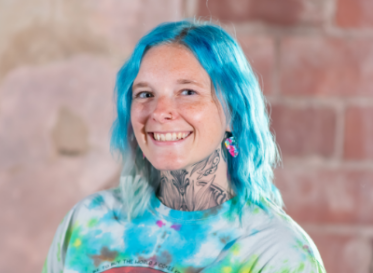
Monica is the creative force and founder of MayeCreate. She has a Bachelor of Science in Agriculture with an emphasis in Economics, Education and Plant Science from the University of Missouri. Monica possesses a rare combination of design savvy and technological know-how. Her clients know this quite well. Her passion for making friends and helping businesses grow gives her the skills she needs to make sure that each client, or friend, gets the attention and service he or she deserves.