Year End Giving Success Story: Missouri Disability Empowerment Foundation
August 5, 2022
CONSUME CREATIVELY
This content is available in:
AUDIO
TEXT
How did an all-volunteer organization raise $20,000 in one month?
We sat down with Michelle Ribaudo and Laura Wakefield from MoDE Foundation to find out. They share things that worked, things they’d do differently, and why planning ahead and training made all the difference to their success.
Episode Highlights
Introductions of Michelle, Laura and MoDE Foundation – 2:13
Getting started with CoMoGives – 8:04
Using training and templates to raise $20,000 – 10:14
What would they change or keep for next year? – 15:28
Creating a mini-event within the campaign – 17:28
Utilizing targeted peer-to-peer giving – 21:42
Reaching donors through personalized thank you notes – 27:33
Advice for others participating in year-end giving campaigns – 32:10
Gaining momentum through cooperation with other organizations – 34:55
Learn more about MoDE Foundation – 41:00
Full Transcript
Michelle Ribaudo: Well, we started with the training, all of the training that you did was amazing and so helpful because we, we learned so much.
Laura Wakefield: And you know, Monica, the social media calendars that you created as templates were extremely helpful for us. We were able to take that structure, but then tweak it for our target audience.
Michelle: Once you do it your first year, then you just have to tweak and that was like the best thing I heard ever.
Monica Pitts: Hello, again, and welcome back to nonprofit marketing with purpose. My name is Monica Pitts, and I’m going to be your hostess today. And I am the lucky lady who gets to interview my guests. Because we are going to celebrate today we’re going to celebrate an awesome campaign for two individuals in an organization that were new to our CoMoGives campaign last year. And those two people are Laura, and Michelle with the MoDE Foundation. And you guys, first I have to give you a compliment were some really attentive and awesome students in our year-end giving training. I mean, you guys showed up for like everything you asked amazing questions, and really made me feel like it was making a difference by doing the training. So thank you so much for being amazing students. So before I get any more, why don’t you guys introduce yourselves and tell our listeners a little bit about your organization?
Michelle: Well, my name is Michelle Ribaudo. And I am a mom of three, two of them on the autism spectrum, which is kind of how we got I got involved with MoDE Foundation. MoDE Foundation is a grassroots organization where we support families through the special education process. We tried to promote inclusivity throughout the community and across the state. We so that so we all kind of came together it was started as six moms just sitting around a table and we decided to come together and try to help other moms.
Laura: And Laura. I’m Laura Wakefield, and I’m a volunteer and consultant for my foundation. And my background is that I’m in private practice advocates, and I work with families who have children with disabilities, who are navigating that confusing process of special education, transition, all the things that kind of go around that across the state. And I was lucky enough to meet up with all those those moms. And we got started together and created this great organization. And you know, we’re all volunteer. There’s, there’s not anyone making a $100,000 CEO budget here. So it’s it’s, you know, busy parents who are stretched thin and struggling and stressed out, and they needed a lot of support. And so this organization formed and Michelle, about how old are we now?
Michelle: We started in 2018. So what are we coming up on four?
Laura: Yeah, still young. And so trying to still get our feet on the ground and realizing that, you know, it takes some money to keep the lights on, keep the website up and running, and then to start doing the goals that we wanted to accomplish. One of those being creating a legal fund for special education for parents across the state who are needing assistance to, you know, for attorney fees that they might need in case they have to file due process on the school district, or they just need advocacy and to understand the whole Individualized Education Program process. So that was one of our big hopes and dreams. And along with the restroom app, which one of our members helped create a an app that allows people to find all the inclusive bathrooms across the state. And so that takes money to keep that up and running. And it’s a wonderful thing we want to we want to keep going and special education PTAs we want to be able to fund those and help help people get those started. So lots of dreams, but those dreams need funding.
Monica: I love the idea of the bathroom app. Having, okay, so I have two daughters. I have one that is seven and one that’s 11. I cannot tell you how many times taking these little kids into the bathroom. I thought to myself, I really wish that I could like have a way that people could understand how their bathroom makes me feel right now, it would either make me feel like wow, look at that there’s a stool so my child can wash her hands. And there’s a way you so she can dry them. This is so awesome. It is the little things you know, or like when you go into a restroom. And I’m not saying every place needs to have a child sized toilet. But just the toilet that a child can actually get on was like, so amazing. And then there were other places where it was just like totally gross. And you’re like holding your kid basically upside down to wash their hands and you’re dripping water everywhere. And you’re like this is not a great experience or you’re like changing a child’s diaper on your lap. Oh, this is terrible.
Anyway, so I love that you guys are doing that. Because for a long time I’ve I’ve like thought man, I could have like a rating scale. I even bought a domain name it was called bathroom Barbie. And I was gonna like spray paint Barbies gold and give awards to people who had amazing restrooms. That’s great. If you need a volunteer to spray paint Barbies to give awards, accessible restrooms, we can even somehow get Barbie into a situation where maybe she’s like, Yeah, like an accessible Barbie. We will we’ll put that on our list. Yeah, yeah, reach out to me, I will spray paint some Barbies for you. There’s a lot in my house anyway, they probably won’t even notice they’re gone. So you guys were new to CoMoGives this year. And to those listeners who don’t know what CoMoGives is, it is our community’s year-end month-long giving campaign. It’s all run online. It’s powered by the Community Foundation of Central Missouri. And my company MayeCreate is the training and marketing arm of the campaign. And we also do the website for the campaign that accepts all the donations. So we’re doing that tech support stuff. So I’m always excited when we have new people come into the campaign. And because it makes us so much stronger.
So tell me a little bit about how CoMoGives plays a role in your fundraising. Now you can even tell us like what made you decide to do it like because it is kind of you’re a small fish in a big pond last year, right. And I think that might scare some people away too. So tell me about that.
Michelle: Well, we were basically like what Laura said, we’re all volunteers. And so we basically had a shoestring budget, we would do everything as inexpensively as we could. But yet we did not turn families away. If somebody needed someone in their IEP meeting, we were there if we needed to look through things. So it was it was challenging. And so we heard about CoMoGives, and we missed the cutoff the year before. And then this year, or the in 2021, one of our volunteers called and, and talked to John Baker and was saying is it too late or too late and we happen to get there, just maybe like a week or two before the cut off. So we were pretty excited about that. But so last year, CoMoGives was our biggest portion of our fundraising because it was like the first really big event we had done. Prior to that, they’d all been pretty small, little small events here and there. And hadn’t really raised a lot of money.
So this was our first big substantial push. And it was a lot of fun.
Monica: You guys did a great job. Like you should pat yourself on the back because you finished 25th out of 148 organizations, and like, especially knowing that you are a small group and you’re an all volunteer group, knowing like you guys raised over $20,000 last year in one month, and that is like for your first time ever. That’s awesome. Like I have goosebumps a little bit just talking about it because I know that some of the people that did like and I know it’s not a competition, but some of the people that earned more than you in that campaign, like they have lots of employees, and they’ve been doing this, they’ve got a system, you know, they’re plugging away.
So tell me about how you made your system last year, like, how did you decide what you were going to do?
Michelle: Well, we started with the training, all of the training that you did was amazing and so helpful, because we, we learned so much about marketing and the wording to use. So that was huge. So taking the beginning things that you put together, then we had a small group of people with them, Laura, and a few others. And we just sat down and divided up. So I did the email stuff. So that’s, and then Laura took over basically, almost everything else.
Laura: Well, the social media stuff I was lucky to be able to work on and, you know, monitor the social media calendars that you created as templates were extremely helpful for us, we were able to take that structure, but then tweak it for our target audience and for our, you know, people that we know will donate, and then also just to spread awareness for building the future.
I also think one of the biggest factors that we learned was the whole appreciation and gratitude piece, which we realized, just in general, that we needed to work on that we’re always appreciative and have a lot of gratitude. But we realized we needed to really kick that up to another level when you’re going into the giving campaign. So that was very helpful, what you laid out for us. And we were fortunate in that.
This is one piece of advice I would give to folks who might be starting new, or who are hitting a slump or something. We found a volunteer who had background in like creating a creative person had a background in digital media. And it was a high school graduate who had had a lot of digital media courses at our Career Center here in Columbia. And he was wonderful with getting all of that stuff set up. And, you know, expert in Canva, and laying everything out on Instagram and Facebook to do those engagement posts and getting people excited building up, you know, through October November to that. So I would say if you have the ability to find a volunteer that can help you with that. Or, you know, we also created a stipend, maybe if you do have a small budget, and you want to put it towards this, and create a stipend setup for that person and figure out how many hours a week I think it was around between 10 to 12 hours a week working on social media for about six to eight weeks concentrated. So that gives people an idea of how much time is a new organization doing this for the first time that that we needed.
And we know this, this year, it will be less time because we’ve already got all those templates created, we already kind of know what our calendars going to look like, we know what worked, what didn’t work. So I think it will be won’t be as much time this year. But I think in your first year, you need to set aside that time,
Monica: I do feel like to finding a young person who’s excited to be a part of it, and has that creative energy can be super positive in so many ways, because they bring ideas in and you may not have thought of them because you’re really close to the subject matter. Also, I feel like their energy is a wonderful addition to the team. And then you’re actually giving them a huge benefit in learning how to work with a, you know, boss in that creative boss because that’s not easy to do. You have to like develop your like creative like bandaid around your soul that like allows you to intake these revisions and be okay, right? So you’re teaching them how to work with with a boss kind of like over there. And then to you’re helping them build their portfolio, which is something that they need to get a job with a company like mine. And so you’re doing really great things when you allow young people to come in and help you out. And even like high school students are great at this kind of stuff. Like they they do a great job.
So it sounds like you guys started early. And I know that you guys actually did put a lot of like planning time in because like there’s a lot of organizations that they don’t email me with questions, even if they’re brand new until like the 11th hour, it’ll be like December 3, and they’re like, which means that we’re at least four days into the campaign probably. And they’re like hey man I was just wondering how do I log into the participant portal? And I’m like, oh, man, let’s do this. But but you guys were not that way, like you started early. Any like, was that? Did you start early enough? Do you feel like you’re gonna start earlier this year or like, tell me a little bit about what that planning process is going to look for you guys now going into your second year of doing it?
Michelle: What I anticipate is starting around the same time that we did last year, and just reviewing kind of what the, what we put on the portal, and then what which things work didn’t work. So we’ll be that’ll be kind of more of what we do at the beginning, as opposed to just like, Okay, what are we doing? And then from there I was, it was so exciting when you said in one of the trainings that, once you do it your first year, then you just have to tweak and that was like the best thing I heard ever. So I think we’ll do more of kind of the planning upfront. But I do think that’s important, because otherwise you’re scrambling and you don’t really have a plan. Laura may talk about this, but they put together this plan of all these just fun date things that were just random things in December that we tied into CoMoGives and so it was fun, too. But we had time to be able to do that.
Laura: I agree that most likely we will be sitting down to review and you know, what worked, what didn’t work and you know, something that you gave us, Monica that our think is a very valuable part of the CoMoGives feedback that you do is after the campaign is over, then you let us know, did our emails, generate donations did we get more and traffic through our social media, that kind of thing. So that’s so important for us to know, when we develop our plan for this upcoming year.
For example, we learned that we got bigger donations, bigger amounts of donations from our email campaign. But we got more frequent smaller donations from our social media campaign. And I think that’s very valuable for us to know moving forward, and then just being able to sit down and compare that and knowing what we want to tweak. And then looking at our donor lists, and things like that, are are so valuable.
Also, I think, what a fun thing that we did, I wanted to talk about that I would like to, for us to keep working on and making it better was when you did the Power Hour, because again, based on your extensive research, you found that there was always the slump day where no organization was really getting donations. And so you thought, well, let’s create this Power Hour, make it one of our contests, and try to beef up, you know, donations coming in that day. So, you know, our social media person came up with this idea of that we’d have a little mini telethon that day, and it ran for that two hour time slot of the Power Hour. And I think we had a blast, or at least I did, I had so much fun. We had our some of our self advocates, some of the kids that are part of our organization, come on and do games, jokes, little stories. We had our board on and they were doing some fun things. You know, playing you know, these games were that could have engagement with our audience as we did it through a Facebook Live method. We got some donations that again, we didn’t really think that would happen. But it was a way that we reached out to audiences that I don’t think we would have ever done without CoMoGives, it may have pushed us to out of our comfort zone to people that we normally wouldn’t ask for donations or normally wouldn’t engage with.
Monica: That is so fun. I love it when organizations stretch themselves and like come up with like, almost as campaign concept within a campaign. That type of creativity is what makes you really successful within this big group. And it was it was John, John Baker, who’s the Executive Director of the Community Foundation, who was like we’re doing this Power Hour, and I’m like, this is awesome.
One of the things I love about working with him is that when we come up with an idea, he’s like, Alright, let’s do it. Let’s try it. I’m always expecting him to be like, you gotta be crazy Monica, we’re not doing this. Every time almost every time he’s like, all right, I got a couple of questions that I’m thinking this sounds good. So whenever he comes up with an idea, I’m like, this is going to be so amazing. So it was really great. And we did bring in a good amount of money. That was like one of the spikes in the campaign. So it was good to see that people were giving, but I love that you guys ran the telethon, because that was really smart to the organizations that always hang out at the very top, like of earners that have gotten a challenge grant every year they do membership drives, during the CoMoGives campaign, and they thought about themselves. We did not tell them to do that they thought of it themselves. And it’s clearly working. Right. So that type of creativity is always rewarded through challenge grants, for sure.
Michelle: It was a lot of fun. And so and then we learned because we didn’t promote it, because it was one of those things that kind of popped up partway through. So this year now that we’ll be able to plan it a little more. I’m pretty excited about.
Laura: Yeah, yeah, I think that was one of the things that we were like, Let’s just try it for fun. And if it’s if it flops it flops, and you know, we at least we had fun with the kids. You know, we had them singing and original Christmas carol they had created and all sorts of funny things that we just enjoyed their time with being with them, and then ended up being a great fundraiser.
Monica: Yeah, it’s like an event within an event within an event. So that makes it even better. It’s awesome. Did you guys do peer-to-peers last year? I mean, I know you did social media, you did email.
So I guess the two questions I’d love to hear about is like, did you do like a mailer? Like did you mail something out? And did you do any peer-to-peer campaigns,?
Michelle: We did not do any physical mail we did all online and electronic mail. And we did peer-to-peer, we went around, we really had no idea what we were doing. And we just hooked a bunch of people in and said, Okay, figure out what you want to do. So we had a range of things from Laura did cartwheels, after raising a certain amount we had, where you would get like, you know, ornaments or popcorn or something. And it was really interesting to see which things were kind of sparked interest, especially in people maybe that we didn’t know, you know, getting those new donors in. So I was, I don’t know, I was always thinking that it would be a, somebody would want something but no, we actually the best ones. Were somebody doing something fun. So we’re gonna keep that in mind for next year.
Monica: Yeah, so those of you who don’t know what a peer-to-peer is, in our campaign, we have like these mini fundraisers inside of CoMoGives. And individuals, volunteers can sign up to run their own fundraiser to support an organization that’s participating in the CoMoGives campaign. And so that’s good to hear that they’re like, We don’t want a thing we want. We just think this is fun. And yeah, that is good to hear. And when you said cartwheels, I was like, ooh, I’ve got a kid who cartwheels.
Laura: So yeah. Another thing we learned was to try to do things in a sort of time limited phase. And if you can have a matching grant with it, it’s very beneficial, because you, for example, the cartwheel thing was, you have 24 hours. So in the next 24 hours, and we did that on the date open, because we got to open November 30, I believe, because that was the Giving Tuesday, right? So that was you have 24 hours on Giving Tuesday for me to raise $2,400. And if I hit my goal, I will do 24 cartwheels on Facebook Live and and you know, put it out there. So we learned that by kind of limiting it to that it kind of creates that FOMO fear of missing out, and you can kind of build up the frenzy on social media, the emails can go out and build that up. And then also then knowing that, if I hit that, that I was also going to match it with $2,400 on my own. So that really helped. And also another matching grant that we did, and that was from Michelle’s family, and towards the end of the campaign.
So we had one in the very beginning and then we have this one building up towards the end so that everybody would get in and then we knew that we’d have those matching funds to go with it.
Monica: Matching is like It’s powerful, it. It’s like a deal, man. Everybody loves a deal. And it’s like, you can do twice as much good by just doing this one thing. So why wouldn’t you buy one get one free only better?
Laura: Exactly.
Monica: And no restrictions. So are there things that you’re like, I’m not sure we’re going to do this next year, maybe. Maybe it was just a lot of work.
Michelle: I think some of the peer-to-peer actually, like giving something is something we’re going to kind of relook at, and maybe try to come up with some other things, not that we would take all of them out because some of them were very successful. But just kind of seeing what people were interested in was, was something we’re going to take a look at, I know me personally, I’ll probably do more of a personal thing this year, then, I think I made bells or something. And that wasn’t that popular.
Laura: I thought it was a cute, great idea. They made retired Jingle Bells, saying, you know the Santas, reindeer, and a lot of kids love that love getting those little things, I think if they made a donation, and they were super cute, creative, very simple to make. But creative ideas. I thought we had a lot of great, I think when the when it was the kids that were making something, we noticed that those those were and people donate it to those, because you know, that is our our self advocates, those are the people we want to empower. And so they were very motivated.
You know, you have a cute kid is making something people donated a lot to their campaigns, they were very motivated on that if they were making an ornament or something like that. And I say maybe versus something that we were doing as the adults. We definitely saw that people really want to support the kids.
Monica: Do you think that you’ll have the kids maybe more involved in other elements of your campaign? You could have them like, write a thank you note or like make the Thank You card you send or even do a like, involve them in some way. And the emails send out like, do you think people might respond well to that, like you could learn from Ooh, people like it when kids make things we shall make kids make more things, but maybe not things.
Laura: Michelle, you did that when you sent out the Thank you. Emails, I think there were Thank you videos, right? Of the kids.
Michelle: So we would do thank you videos, we would personalize them, we set a kind of a limit internally, like anyone who did over a certain amount, then our kids would send a cute little thank you and say their name and which was, which was a lot of fun to do. But then I think it was fun to receive too. And then, but you were right. We are our kids are amazing. And we love doing things with them. So we did learn that, yeah, have them involved. I mean, it’s benefiting them and you can and then I think people can really relate to it’s like, okay, like, my child could do that too. Or I could go help.
Laura: We definitely learn, for sure, definitely learned that disability touches everyone’s life, they have a family member, they have a friend, a work colleague, someone that has a child with a disability. And so I think they know that that is really important. They want to empower them, they want to make our community better, make it more inclusive support an organization like node to help families do that. And they know that their donations directly impact them right here in our community. And when they see that and they even like I know that kiddo or that oh, he’s friends with my, you know, work colleagues, kiddo. So I think that kind of connection, when when we have the kids involved is really important in helping people understand that when they donate, it impacts our organization and and helps our kids you know, have optimal outcomes for their future.
Monica: You think about the things as like before you have kids, you went through the school system and you’re like, oh, yeah, I was school is whatever, you know, but I don’t think that you truly appreciate how, what what an interesting life experience it is to have children going through a school system and then if you add on top of that, having an IEP or working and understanding like okay, how can I I adjust this environment to meet my kids his needs, then it just like adds this whole nother level of complication on top of it. And I don’t think that people really appreciate that because there is just, I think it would be the same thing when people say, I’m going to start a business, I’m like, okay, that’s awesome. A lot of pieces that you don’t, I’m sure you feel the same way, starting an organization, you’re like, Ah, welcome to figuring out how the government works. Definitely. I think that you guys are doing a great job of making people more aware of that. It is it’s a challenge, you know, and there’s so many pieces of the challenge, but navigating the school system is definitely it’s challenging enough in and of itself, and then add another piece on top of it. And it’s got to be much needed what you guys are offering for sure,
Michelle: Definitely, and it’s a, we’re hoping like what you said to raise awareness, because we want to pull those parents out. I mean, because I just remember feeling so alone. And I was researching ide a and five oh, fours and IEPs, because it was just a whole new world. And everyone kind of speaks a different language. And so it was just kind of like what you said, shining a light on it, just getting that education piece out there, where it’s not as you know, we have to hide or anything. So it was it’s been, I’ve met a lot of great people, and I hope to meet more.
Monica: So any final advice that you want to give somebody if they’re like, because I mean, not everybody gets to do CoMoGives like only only the cool fun people around us, right. But there’s people, organizations all over the world that are participating in Giving Tuesday and that are running a year-end giving campaign, and many of them are in the exact same place that you guys were in last year, which is, hey, we haven’t really done this before. So is there any advice that you would give to them, someone sitting in in your last year shoes to make their this year look like your last year?
Michelle: I can start and then I’m sure Laura has some stuff on the social media side. But to me, it was training. So even though we had tried like, oh, this might work, or that might work, we found out just through the training. And you offer a lot of stuff just on your regular website, also, where it’s just the way you word something, how to make people feel like, you’re not saying, give me money so that I can do this, you’re telling them what exactly they’re actually doing, because they’re the ones doing it because they’re funding it and doing the legal fund. And so it was a lot of that tweaking and wording that without having the marketing background, you know, I had no idea and a lot of the planning and checklists, you know, on, I would just say go to your website and download everything, because it was all very helpful to us that had no training in that and we were able to navigate through it.
Laura: I guess I would say don’t be afraid, you know, don’t have a fear of just jumping in. Because it’s one of those experiences that you aren’t going to know everything until you try it first, you’re not going to know all the great things that could come of it. You know, don’t be afraid of all the, quote, hard work and planning. Just jump in and jump in and see. And maybe you are that organizations contacting Monica on December 3. But you’ll learn from that you will learn from that experience, you will have, you know an idea of what is expected and if it’s for you or not. And then you’ll know if you can do it next year. And the only way you’re going to find out is just jump in and try it.
Monica: Now, a lot of people tell me that they’re like, Well, I don’t know, I can’t do that because I just I don’t have time to make it right. I don’t have time to make it perfect. If somebody said that to you guys, and especially the people who are coming in at like the on the December 3 or heaven forbid, December 20. And they’re like, I just don’t have time I’m just not even going to do it because it’s I’m not gonna be able to do it right. So I shouldn’t do it at all, would you what would you tell them?
Michelle: I think exactly what Laura said give it a try. Because we notice we get a lot of data so we know that like most of the donations are giving Tuesday and then the end of the year. So even worst case, if you just focus on those days, that will be helpful. So if you if you just need to know where to start, just start with that.
Laura: And I would say that one of the great things about the CoMoGives that out is that all these organizations are together on one spot. And so you will have somebody going and kind of shopping around to donate. And I found myself being one of those people. And I have to admit, I had never done this before, I had never gone to the CoMoGives site and donated. But because I was going every day to check where our status was, I would see all those other organizations. I wonder what they’re doing. And I would open it up. And I will say, Oh, this is fascinating. Oh, this is great. Oh, and I ended up donating to 10 organizations that I had never donated to before. And I also got a lot of my Christmas shopping done, FYI.
And, you know, a couple of those organizations didn’t raise a lot of money, I didn’t see them putting a lot out there. But just because they were tied in on that page. With all the other organizations, people started donating, and then I noticed by the end of the campaign, they have raised a good amount of money.
And maybe they hadn’t done a ton of social media or emails, but because they are on that page right there with all the other organizations, they raised some money without a lot of effort.
Monica: Yeah, I think that that’s the same thing, like people say, I’m not going to do Giving Tuesday because like everybody’s doing Giving Tuesday. And it’s like, Yeah, but there’s this momentum. So there’s, there’s that momentum, like period, like, right, and so you’re gonna capitalize on it.
And we did get like our donor survey results back. And the fun thing about it is like you guys jumped in, you know, you got your feet wet, you’re like, we’re gonna try this, we’re gonna do our do our very best, and you guys did a great job. And so what we find in this year’s donor survey is no different, like 64% of people who donate one year on CoMoGives donate every year, on CoMoGives. So like, if you, like wrap that into a year-end giving campaign or any fundraising campaign just realize that like over half the people that donated to you last year for your campaign, we’ll probably do it again. And the other fun thing, too, which is really reflective of what you were talking about Laura, is that 56% of our survey participants donated to a nonprofit that they had never donated to before. Which is so awesome. Because when we started this campaign, nine years ago, they people were like, I don’t know, I don’t know how I feel about sending my donors to a website where there’s all these other nonprofits, what if I lose them? Right? And so but what we what was awesome is after the very first year, knowing that almost like not almost but most people donate to I want to say it’s like 1.5 nonprofits, you know, so that means that they’re donating to more than one. Some people just do one, a lot of people do multiple, and then knowing that they’re meeting new nonprofits, it’s, it’s like, yay. And so that immediate, like myth was dispelled, like after the very first year. And so I think that to people who are considering doing a year-end giving campaign or participating and giving Tuesday, but they’re like, I don’t know if I want to do this, because there’s so many people out there. What if there’s too much competition? Friends, I don’t think it’s competition. I think it’s awesome. And people are in the spirit of giving. So why not ask you know? And like Laura said, I mean, you’d have to try it. You’re gonna learn from it, right?
You guys jumped in and you earn over $20,000?
Michelle: Which was so amazing. I mean, I, I think we were celebrating when we first we just did the 10,000 and then moved it up, because we hit 10,000. Right after giving Tuesday, and we did our Google Shopping for two days.
Laura: Michelle’s out, right. And we were worried about that. We thought, should we then you know, move it up to 20,000. Is that too much? And then we hit it. So yeah, was great, right.
Michelle: So let’s see what we stretch ourselves with this coming year. I have. I mean, I have it in. I haven’t budgeted, but we’ll see what we put on the website.
Monica: I know that this year, John is going to tell me that it’s going to be $2 million, at least for this campaign.
Michelle: I think that’s a given.
Monica: I like the first year that we set a goal we like we had not done it before. So I want to say it was like maybe the fifth year we ran the campaign. But maybe it was sooner than that. But anyway, I was like, John, I think we need to set a goal. And he’s like, okay, and I said, I think it needs to be this and he was like, I think you’re crazy, but we can do it anyway. And so now I’m like I’ve created a monster. He’s it’s amazing. Like, now he comes to me and he’s like, this is gonna be the goal. $2 million, and I’m like, oh, Okay,
Michelle: I think of all the good that that has done, the number of families that we’ve been able to support just being able to get some, update our websites a little bit, kind of get some of the resources together, we’ve been able to connect with other organizations throughout the state. And so kind of getting this networking and being able to be in meetings with families, it’s really been very beneficial. So anyone listening, please can please watch out for because we really, that legal fund is amazing to help families. And so we would definitely appreciate support.
Monica: So if they, if our listeners want to learn more about the MoDE Foundation, or if they have maybe questions for you about what you do, or maybe even are like me, and I’d really like to hear more about how these ladies ran this amazing year-end giving campaign, how can they find you?
Michelle: We have a website, it’s moempowerfoundation.com. We also are on Facebook. So you can find us as MoDE foundation on there. We’re on Twitter. And you can just go to our website with that information, you can contact us through there. And if you want to volunteer, donate money, do whatever we are, we would love to chat with you.
Laura: We always have lots of projects going on.
Monica: Well, thank you so much, ladies, I love your success from last year, it is well deserved. You guys worked really hard. And I felt your energy and your dedication from the very beginning. And so thank you so much for being such great participants and for working so hard and being such great students.
Laura: Thank you for all Monica to support it. And it’s made you make it easy for people to walk into it.
Michelle: Yeah, you definitely do. And we couldn’t have done it without the training and the stuff that you put together because we really had no idea but we just followed the advice and it was really just phenomenal.
Monica: Well, thank you and you guys are going to do awesome this year. Go CoMoGives.
Okay with that, friends, we’re gonna wrap up. Bye, everybody.
Once again, my name is Monica Pitts. And you’re listening to nonprofit marketing with purpose. Now before I let you go, will you please review this podcast wherever you’re listening? It will help us show up when people are looking for answers to the problems that this podcast will help them solve. So if you’re a fan, and you haven’t reviewed the podcast, please leave me a review. That would be so awesome. I would love to hear your feedback. And if this was your first time, I mean double welcome and I hope you learned a thing or two so leave a review so we can connect with even more awesome nonprofits just like you and help them on their journey to less stressful and more successful marketing.
Who Manifested This Madness?

This fabulous human, that's who.
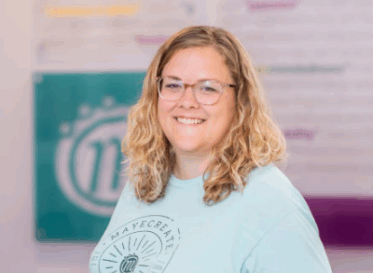
Monica Maye Pitts
Monica is the creative force and founder of MayeCreate. She has a Bachelor of Science in Agriculture with an emphasis in Economics, Education and Plant Science from the University of Missouri. Monica possesses a rare combination of design savvy and technological know-how. Her clients know this quite well. Her passion for making friends and helping businesses grow gives her the skills she needs to make sure that each client, or friend, gets the attention and service he or she deserves.