What Every Great Planned Giving Website Has in Common
October 15, 2025
CONSUME CREATIVELY
This content is available in:
TEXT
Planned giving (also known as legacy giving) activity is growing across nearly every donor age group and giving method. In fact, charitable bequests alone (facilitated just through FreeWill) topped $2 billion last year—a 13% increase from the year before. A helpful planned giving website is the key to capture these funds for your nonprofit!
But before building one, it helps to understand who the legacy donor really is. Legacy giving isn’t limited to the very wealthy.
Table of Contents
Everyone from lifelong savers of modest means to major donors can leave a legacy gift. In general, many donors have heard of planned giving but aren’t already familiar with the range of opportunities available, so your site might be the first place they learn about them. Donors might also discover these opportunities in conversation with staff or even through advice from a financial advisor or attorney. That means your site can also serve as a place staff and professional advisors can send people for reliable backup information.
When done well, your nonprofit’s planned giving microsite (basically a section of your site that explains legacy giving options) becomes a trusted guide for supporters who want to make a lasting impact on your cause. However, many nonprofits bury planned giving information with poor navigation, use complicated jargon, misplace call-to-action buttons, or (worst of all) don’t even mention legacy giving at all. This leads to some major missed opportunities to secure legacy donors.
So, how can you create a planned giving website that’s helpful and inspiring?
The most impactful planned giving microsites are thoughtfully designed for donors. They include simple language, clear giving options, and compelling reasons to give. Let’s look at essential characteristics to consider when creating the planned giving section of your nonprofit’s website.

1. Clearly Outline The Types of Planned Gifts
Planned giving isn’t one-size-fits-all. Different donors lean toward different types of planned gifts. By outlining different ways to give, you empower supporters to pick what works best for their circumstances.
When deciding how to feature different types of planned gifts on your website, think about the level of detail each deserves. Your site might have one main overview page listing all gift types briefly, with buttons linking out to dedicated pages for the priority ones.
The most popular options—like bequests, beneficiary designations on retirement accounts, or grants from donor-advised funds—usually merit their own pages. On these pages, you might include:
- A plain-language definition of the type of gift
- Step-by-step instructions or a link to tools that help donors take action
- Answers to common questions or concerns (for example, whether they can change their mind later)
- Stories or examples showing how other donors used this gift option
For example, let’s say you create a page about donor-advised funds. You might include a short explanation of what they are, steps for donors to take to name your nonprofit as a final beneficiary, and a few FAQs about taxes or timing. FreeWill’s DAF guide also recommends using a tool to facilitate the giving process for donors. Your page about DAFs would be a great place to direct users to that tool.
Other types, such as charitable gift annuities or appreciated assets, may only need a short description on your main planned giving page unless you are actively promoting them.
This balance keeps your microsite user-friendly. Donors can quickly see the range of options, and those who want more detail can click through for a deeper dive. It also supports staff and advisors who can point donors to the right page depending on the conversation they’re having.
2. Simple Language
The planned giving section of your website should be easy to navigate, visually clean, and free from overwhelming financial or legal language. Most donors aren’t experts in estate planning, and they don’t need to be!
Use plain language.
Explain legacy giving in clear terms. Particularly, try to align your site’s copy with how people actually talk about their finances. For example, instead of just saying “bequest,” define it and use phrases like “a gift in your will.” Consider introducing a “charitable remainder trust,” as “a way to give while still receiving income.”
Wherever possible, remove technical jargon and give brief explanations for any other complex terms. You might add definitions in tooltips (an overlay or callout that appears when you hover over it with your cursor) or expandable and collapsible accordion menus. This way, curious donors will be able to get clarification without leaving your site.
Here’s a great example of what simple language might look like:
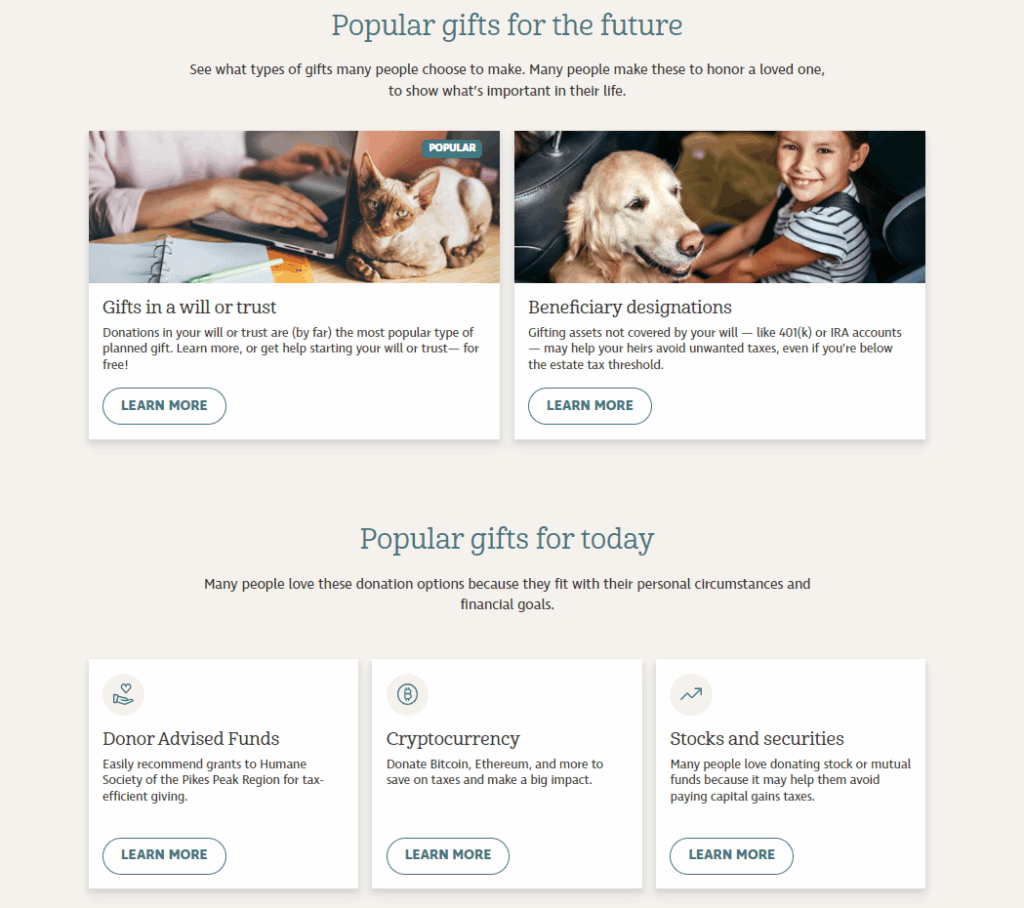
Notice how the page uses language like “gifts in a will or trust” and “gifting assets not covered by your will” to make legacy giving easy to understand.
Getting Attention’s guide to copywriting for nonprofits recommends a few strategies for clear writing, such as avoiding wordy phrases that make your sentence confusing. Try to keep things simple and avoid long sentences, so your page is easy to read and understand.
Keep in mind that talking about legacy giving can feel sensitive, because it may come across as focusing on what happens after a donor passes away in some cases. The key is to frame it with care: emphasize the donor’s values, their desire to make a lasting difference, and the peace of mind that comes with knowing their wishes will be honored.
Organize information logically.
Structure your content with the donor’s journey in mind. If your organization only has room for one planned giving page, make sure that page covers the essential in easily scannable sections. You might focus on:
- Why legacy giving matters: Showcase its long-term impact on your mission.
- How to make a gift: Offer step-by-step guidance or link to relevant tools.
- The impact of legacy gifts: Share stories and data that demonstrate outcomes.
- FAQs about estate planning: Address common concerns and misconceptions.
If you’re building a microsite, or dedicating a section of your site to legacy giving with multiple pages, this outline can also serve as guidance for what to include where. In that case, the main page can act as an overview, while individual pages can go deeper on gift types your nonprofit prefers. Either way, aim to make your site’s navigation intuitive so donors—and even staff or advisors—can find what they need quickly and without feeling overwhelmed.
3. The Benefits of Legacy Giving
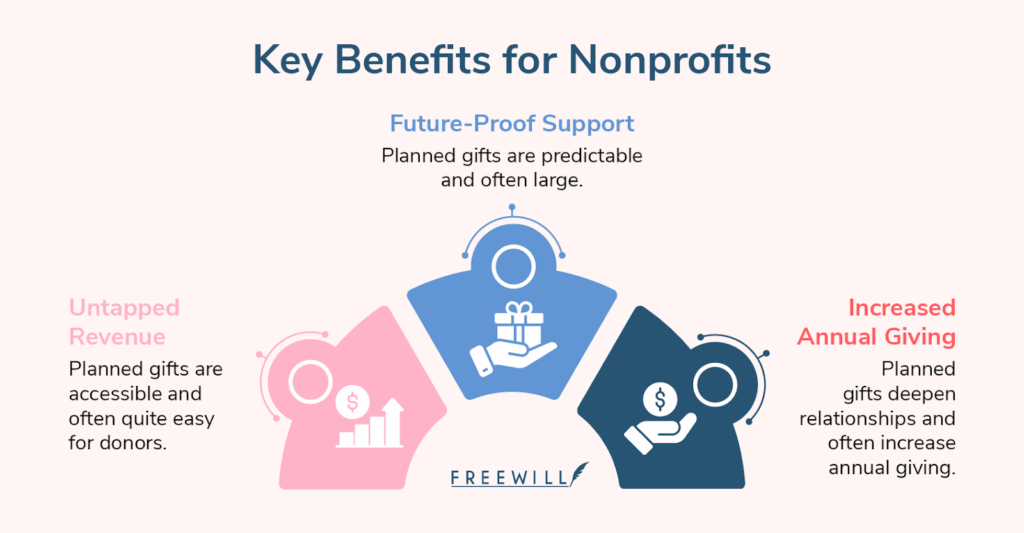
Your donors might be surprised that they can make a lasting difference without affecting their current finances. An effective planned giving section on your website will put that front and center. Meanwhile, the benefits for your nonprofit include:
- Planned gifts allow anyone, whether frugal savers or major donors, to leave a meaningful legacy.
- Planned gifts are typically larger and more predictable than annual giving, providing stability to your nonprofit.
- Donors who commit to a legacy gift often remain engaged, are loyal to your cause, and may even increase their annual giving along the way.
To encourage donors to make a legacy gift, focus on what’s in it for them, not just your nonprofit. Some of the benefits you might highlight with donors include:
- Create change that lasts for generations
- Possible tax benefits for you and your family
- The ability to give in a big way without changing your day-to-day finances
- Peace of mind knowing your gift will keep helping the causes you love
By presenting these benefits clearly, donors will feel confident in their decision and understand that legacy giving is a partnership.
4. Legacy Donor Stories
Include social proof in your marketing to bring the benefits of planned giving to life! Donors connect with people more than processes, so highlight real-life stories from legacy donors to show planned giving in action.
These personal stories matter because they showcase the different ways people give, highlight the diversity of legacy donors, and build trust in your organization. Plus, they’re a great way to show donors you appreciate them! In the stories you share, you might:
- Include quotes about why the donor chose to make a legacy gift.
- Share the impact they hope their gift will have.
- Use photos and videos to put faces to the stories.
- Highlight how easy it was to make that particular legacy gift.
Update stories periodically to keep your planned giving site current. Adding recent testimonials and examples of real legacy gifts will make sure that your content stays relevant and trustworthy. These stories are also great content to share on social media and newsletters to both thank donors and promote the idea of planned giving.

5. Clear Calls to Action
An effective planned giving website invites action at every turn. Supporters should never be left wondering what to do next, so try to provide clear, encouraging calls to action (CTAs) that guide them to a natural and meaningful next step.
For example, at the end of a legacy donor story about a supporter who left a gift in their will, you might direct readers to explore tools to leave a bequest or reach out to your team to learn more. Some other examples of strong CTAs include:
- “Explore different ways to leave a legacy gift”
- “Contact our team to start a legacy conversation”
- “See how our legacy donors have made an impact”
- “Learn how to add our nonprofit to your will”
Your CTAs should be simple, specific, and supportive. When deciding how to use CTAs on your site, think about format and placement:
- Short versions work well on buttons, while longer versions can serve as section titles or links.
- Pair CTAs with images or graphics to help them stand out, almost like small ads within the page.
- Repeat the same CTA in multiple places if it’s a key action you want donors to take.
- Weave CTAs naturally into your text so they feel like the next logical step in the story.
CTAs are powerful because they guide people through your site without forcing them to think too hard. That keeps visitors on your site longer, helps them dive deeper into your content, and gives them a clearer sense of how they can support your mission. It’s also good for SEO. Longer engagement signals to Google that your site offers quality information, which can boost your visibility in search results.
By offering next steps at the right points on your site, you make the planned giving process feel approachable and ensure visitors know exactly how to move forward.
Start Turning Website Visitors Into Lifelong Supporters.
Legacy giving can feel complicated, but your website can simplify it for donors. With clarity, compassion, and practical tools, your planned giving site can inspire lasting generosity.
If your organization hopes to strengthen its legacy giving program, your website plays a big part in that! A well-designed site that answers donors’ questions can make the difference between a visitor moving on quickly or taking the first step toward a lasting gift that fuels your mission.
Who Manifested This Madness?

This fabulous human, that's who.
Patrick Schmitt